Bee Species at Risk in Alberta
What does “at risk” mean?
A species can still turn up in your garden even when it is disappearing from parts of its range. Scientists look at evidence such as where it lives, how its numbers have changed and whether it can still find the food and nesting sites it needs.
-
Endangered means a species faces imminent disappearance from Canada or extinction. Threatened means it is likely to become endangered if the pressures on it continue. A species of Special Concern could become threatened or endangered. Data Deficient means there is too little information to judge its risk reliably.
Each profile gives the national scientific assessment from the Committee on the Status of Endangered Wildlife in Canada (COSEWIC) and the legal listing on Schedule 1 of Canada’s Species at Risk Act (SARA).
How are Alberta’s bees doing?
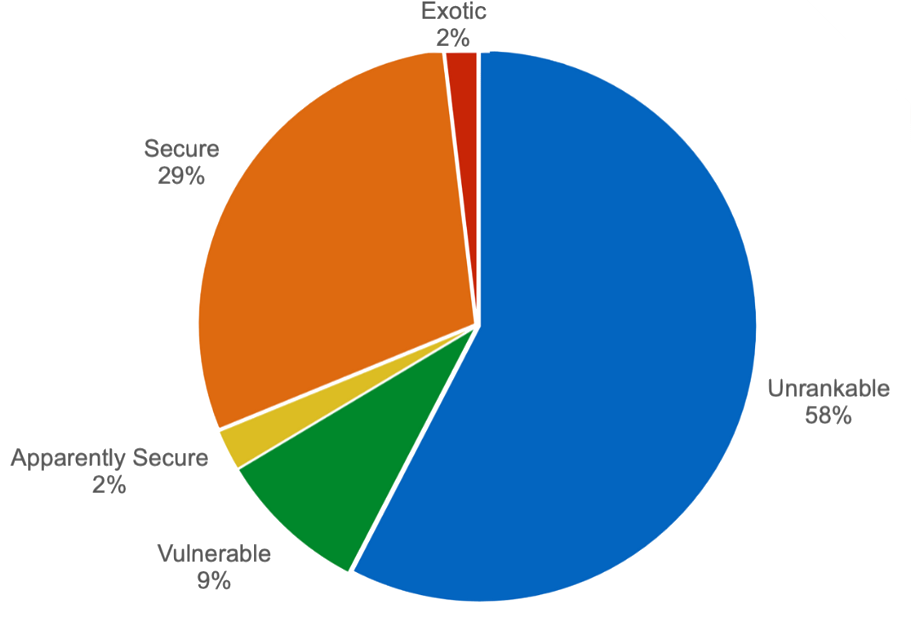
For many of Alberta’s native bees, we’re still learning the answer. In the 2020 chart, 58% of AB bee species were classified as Unrankable. This means that the available records were too limited to assign them a reliable conservation rank.
Bee numbers can vary from year to year, so repeated surveys over time are needed to identify long-term trends. ANBC’s Provincial Native Bee Monitoring Program helps fill this knowledge gap by tracking native bees across Alberta every 5 years.
Meet Alberta’s at-risk native bees
The first two bees are bumble bees with your typical lifestyle, in which the queens raise workers that gather food and help rear the next generation. The three cuckoo bees have a different life cycle. For cuckoo bumble bees, a female enters a nest built by another bumble bee and lays her eggs there. The host colony’s workers then raise the cuckoo bee’s young. Cuckoo bumble bees have no workers of their own, so their survival depends on healthy host populations and the nests they build.
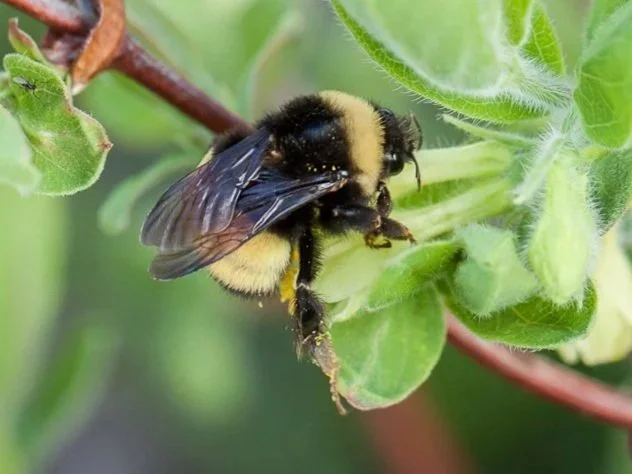
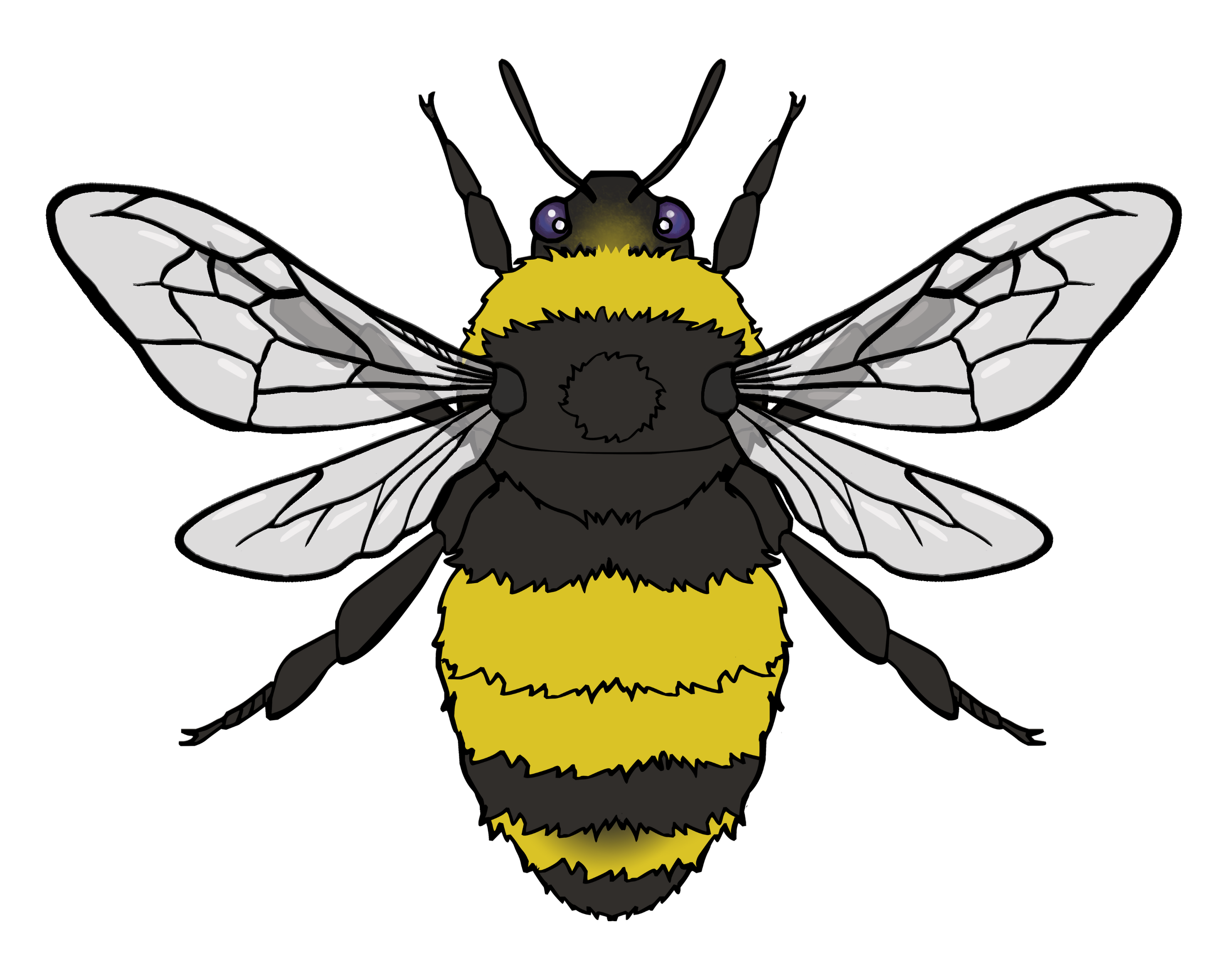
Yellow-banded Bumble Bee
Bombus terricola
COSEWIC Special Concern (2015)
SARA Special Concern (2018)
-
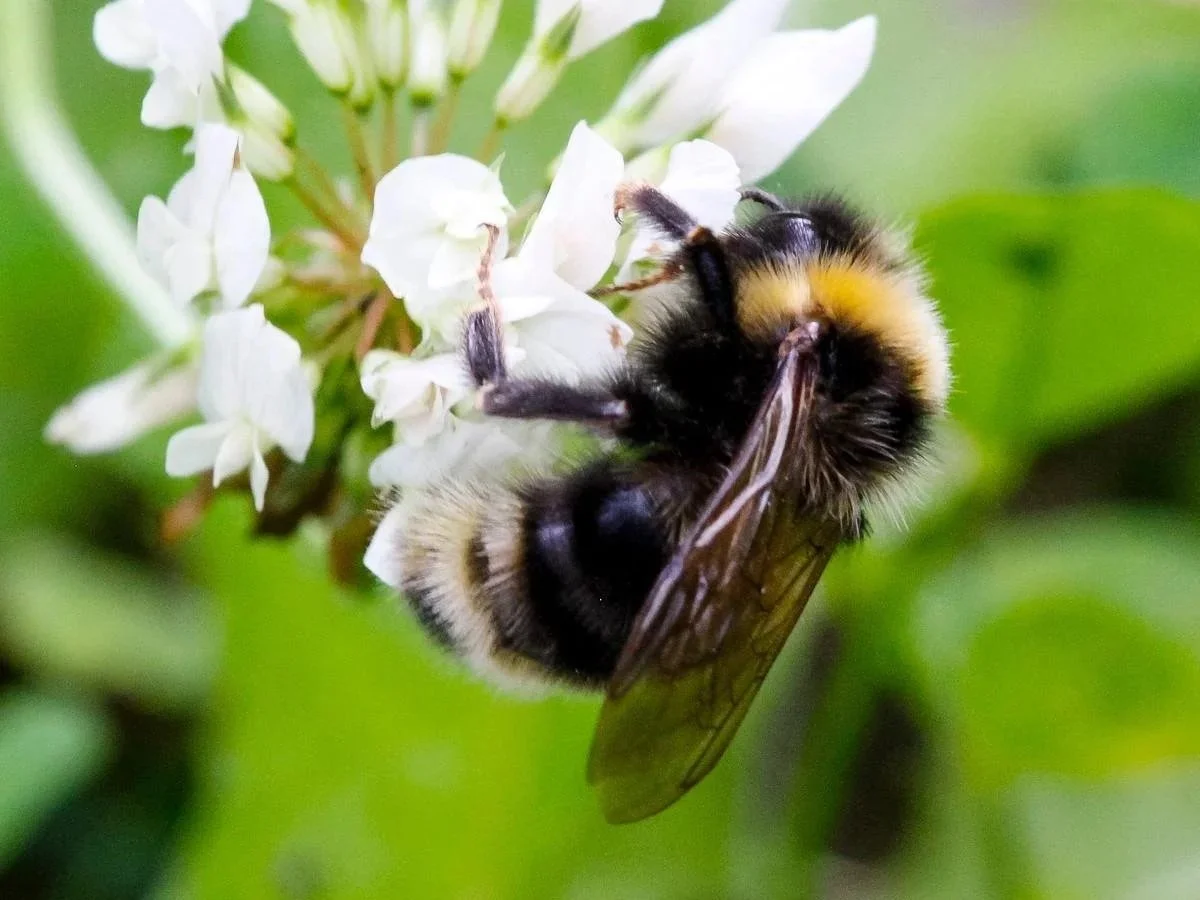
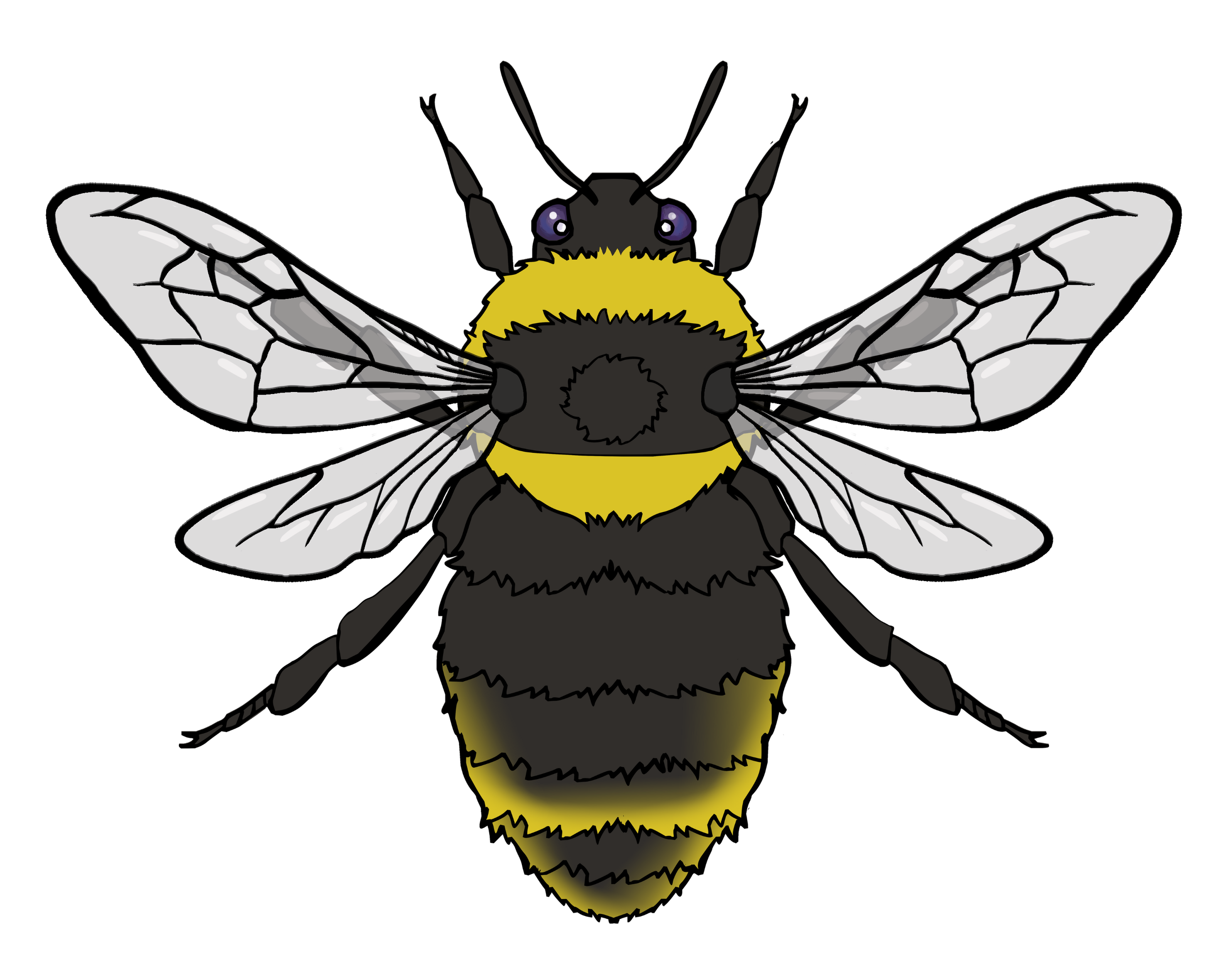
Look for a broad yellow band across the middle of the abdomen. On a queen or worker, that band covers the second and third abdominal segments, with black hairs just behind it. Another patch of yellow sits in front of the wings, giving the bee its distinctive yellow–black–yellow–black pattern from front to back.
-
Yellow-banded Bumble Bees occur across Alberta, especially in the Boreal Forest and Foothills. In spring, a queen often starts her colony underground in an old rodent burrow. The colony visits many kinds of flowers over the season, from pussy willow (Salix discolor) blossoms in spring to prairie goldenrods (Solidago missouriensis) later in summer. On a deep flower, watch where the bee puts its head. Sometimes it bites a small hole near the base to reach nectar its short tongue can’t reach through the opening. This behaviour is called nectar robbing.
Once among the most frequently recorded bumble bees in Canada, the Yellow-banded Bumble Bee has declined in parts of its southern range. Disease, pesticide exposure and the loss of flowering habitat are concerns.
Gypsy Cuckoo Bumble Bee
Bombus bohemicus
COSEWIC Endangered (2014)
SARA Endangered (2018)
-
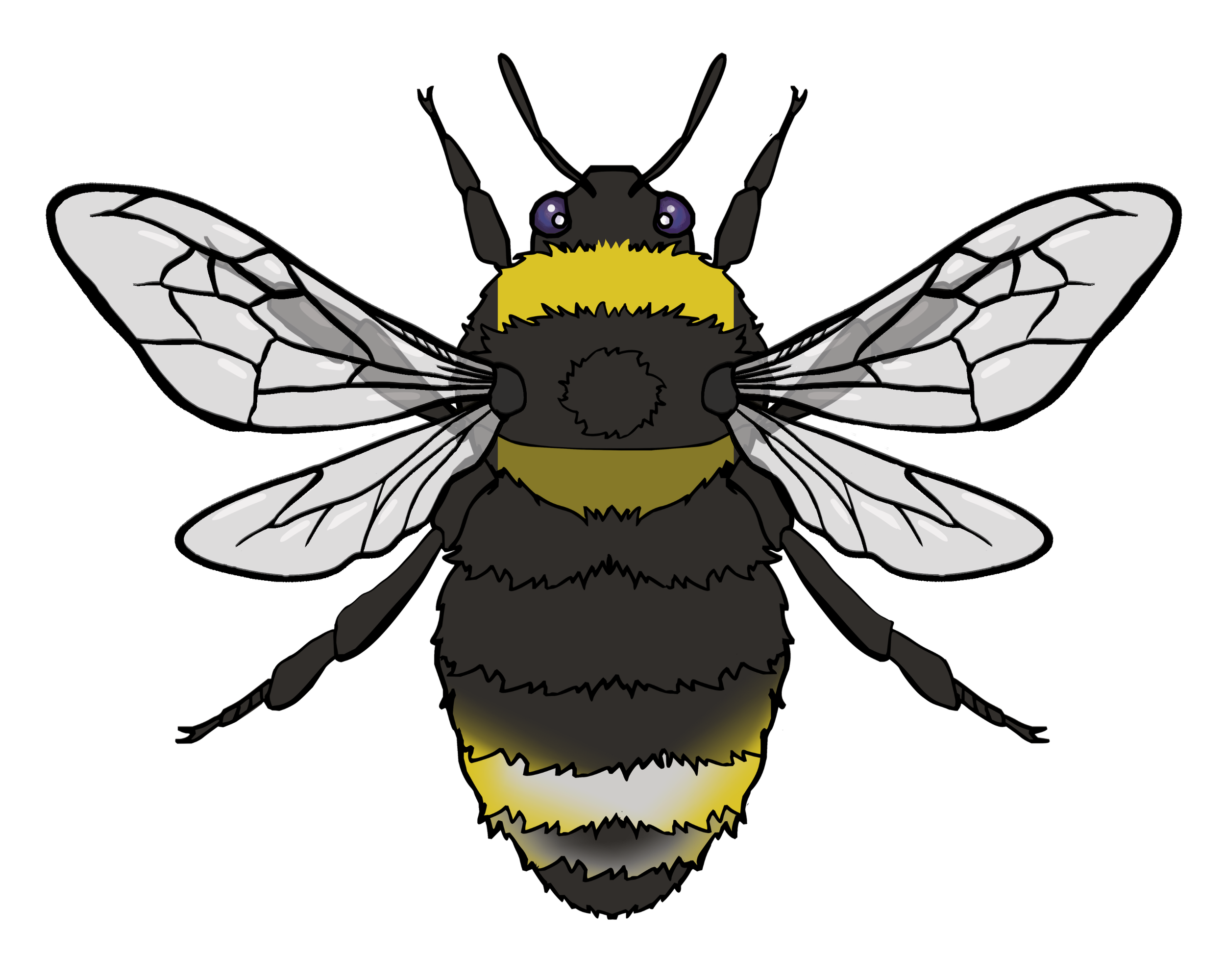
This medium-sized cuckoo bumble bee has a dark face and a yellow band just behind the head. A broad black patch covers much of the thorax behind that band. The abdomen is mostly black, sometimes with yellow hairs along the sides and a band of white or pale yellow hairs near the tip, often on the fourth and fifth abdominal segments. Colour patterns vary. One clue that a female is a cuckoo bumble bee is her hind legs: she lacks the smooth pollen baskets (corbicula) used by nest-building queens and workers to carry pollen.
-
In central Alberta, this bee can be found along wetland edges in agricultural landscapes. Adults visit flowers such as Lindley’s aster (Symphyotrichum ciliolatum), and Prairie goldenrod (Solidago missouriensis), among others, for nectar.
Females emerge in spring after host queens have begun establishing colonies. A female enters a host nest and may kill its queen. The workers already living there then rear her offspring. Documented hosts include the Yellow-banded Bumble Bee and potentially the Western Bumble Bee. Losing host colonies leaves the cuckoo bee with fewer places to reproduce.
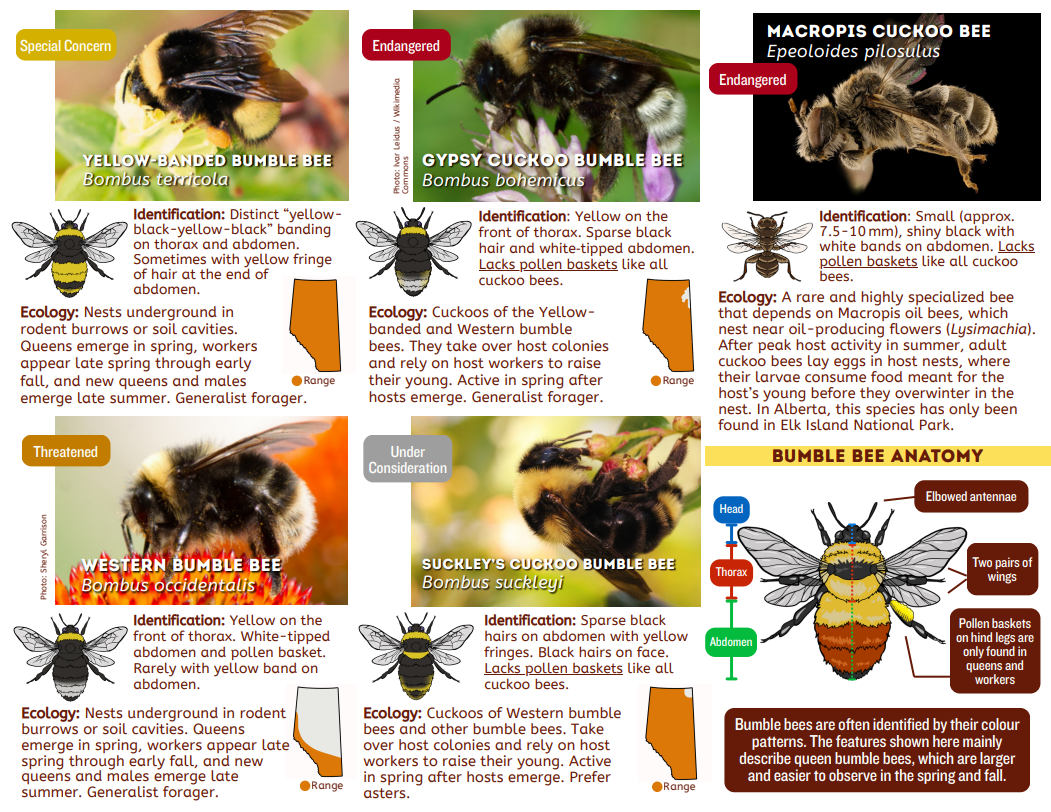
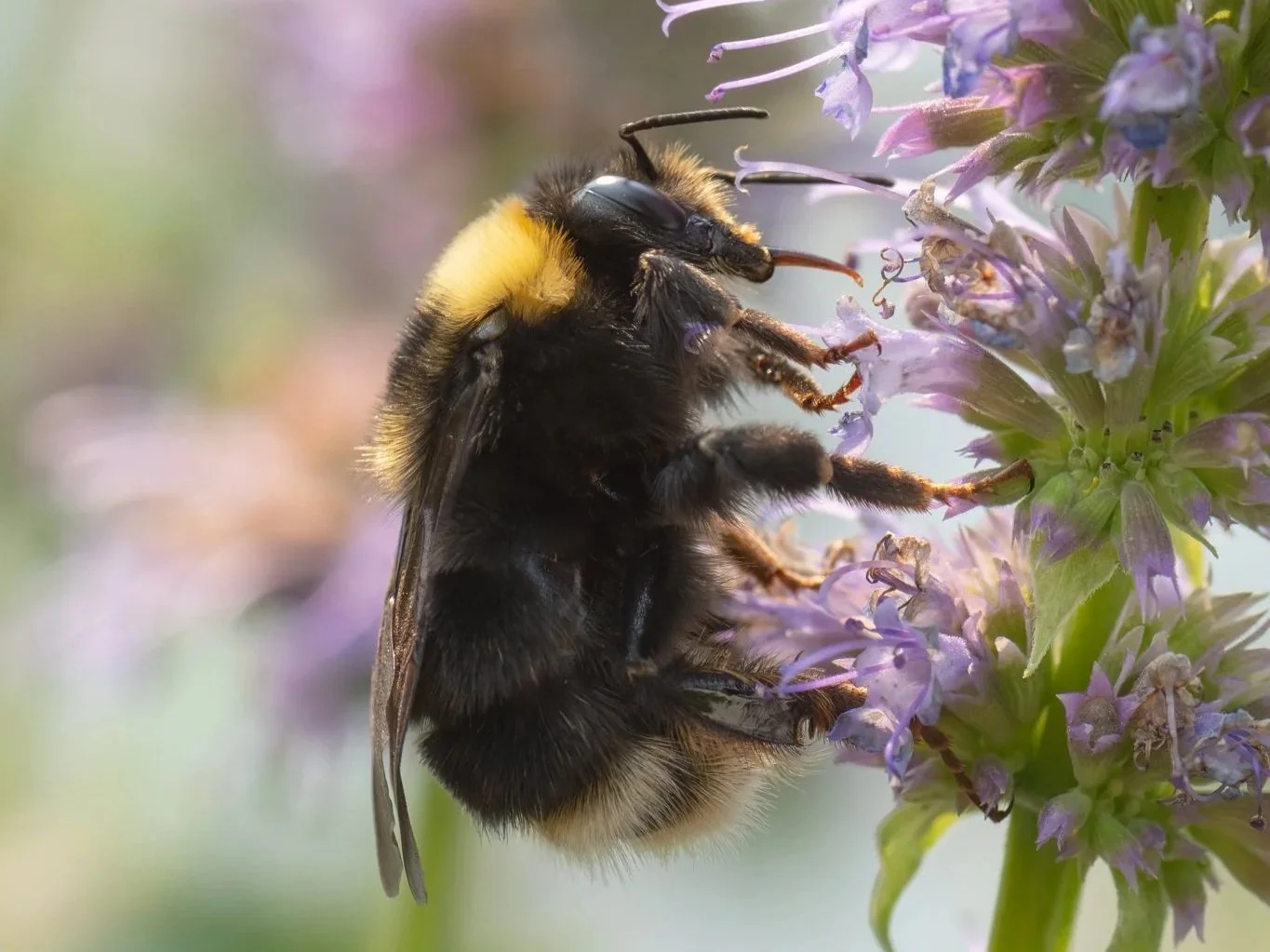
Western Bumble Bee
Bombus occidentalis
COSEWIC Special Concern (2015)
SARA Special Concern (2018)
Bombus suckleyi
COSEWIC Threatened (2019)
SARA No Schedule 1 listing
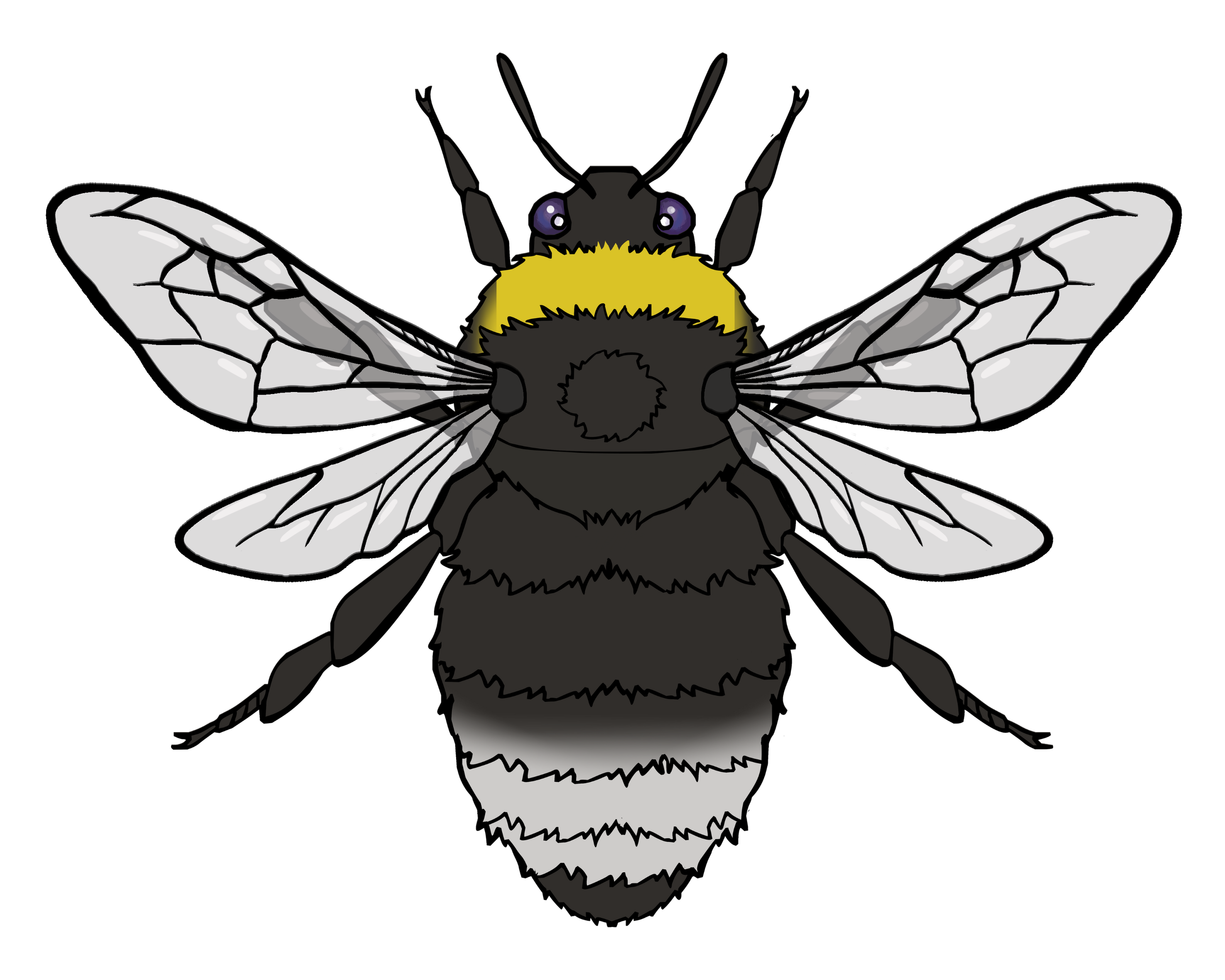
-
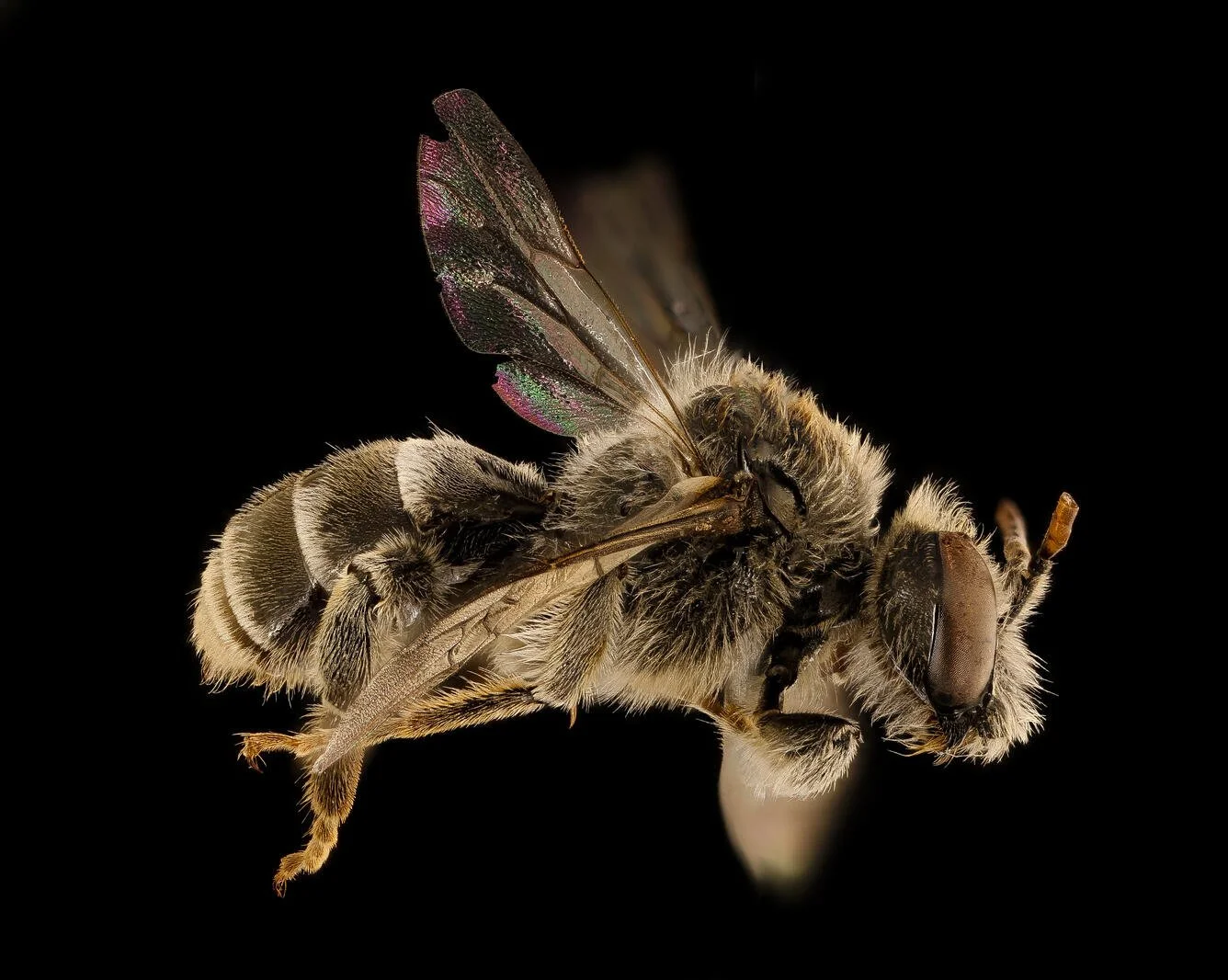
The white tip of the abdomen is often the easiest feature to spot. The form most common in Alberta has yellow hair across the front of the thorax, and a mostly black abdomen ending in white. Some individuals also have a yellow band on the abdomen.
-
In southern Alberta, this species has been recorded in foothill and mountain meadows, grasslands and farmland. Queens often nest underground, and workers forage on a wide variety of flowers such as giant hyssop (Agastache foeniculum) and smooth blue beardtongue (Penstemon nitidus). A Western Bumble Bee colony can also become home to another species featured here: Suckley’s Cuckoo Bumble Bee.
Habitat loss, pesticide exposure and disease are among the pressures identified for this species.
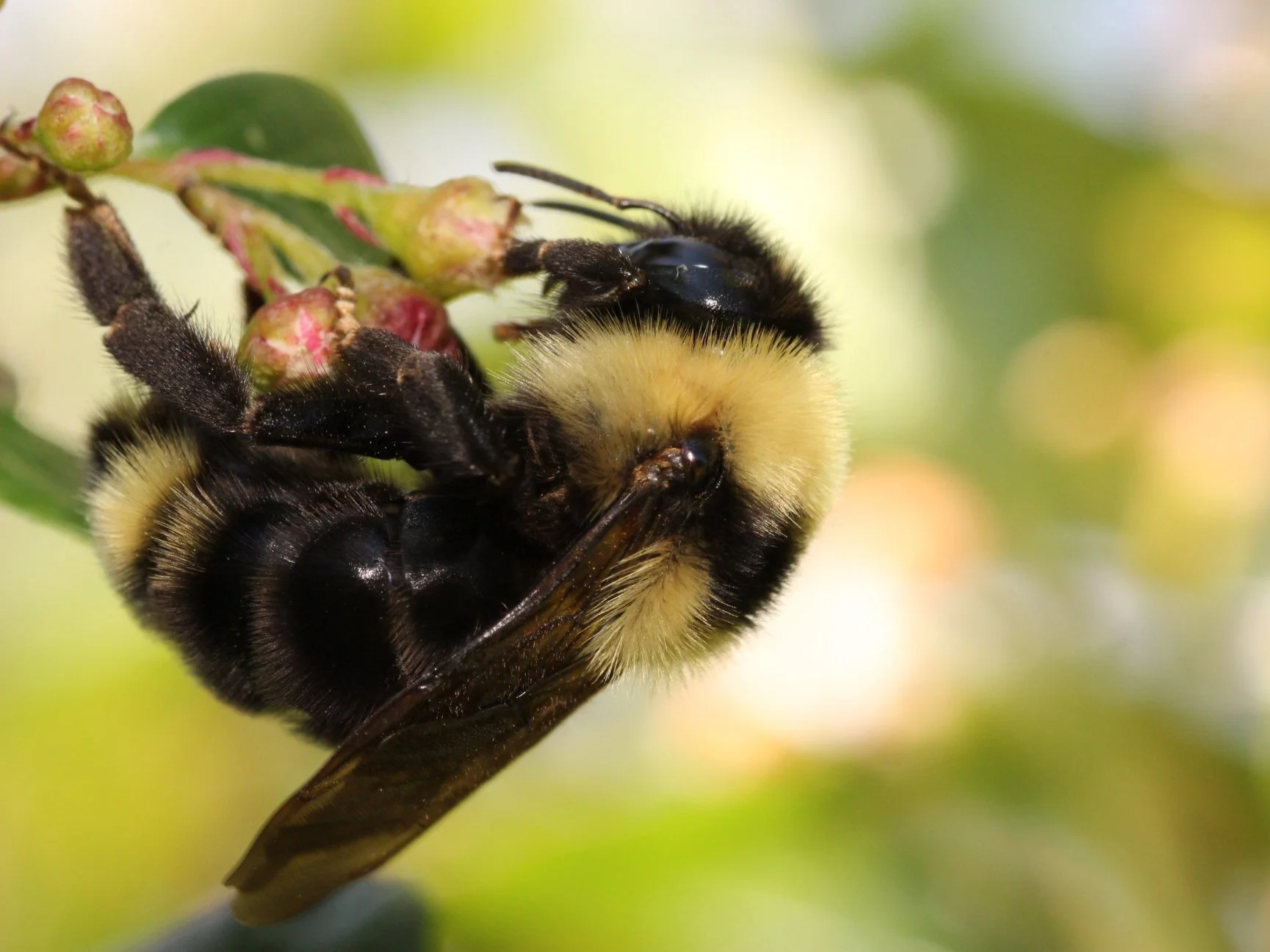
Suckley’s Cuckoo Bumble Bee
-
A female Suckley’s Cuckoo Bumble Bee has a broad, square-looking head, black facial hairs and a sturdy body. Her thick outer covering helps protect her when she enters a nest defended by host workers. Much of the black surface of her abdomen shows through its sparse hairs, with yellow fringes or pale patches along the sides and near the tip. Viewed from the side, the tip of her abdomen curves downward.
One clue that a female is a cuckoo bumble bee is her hind legs: she lacks the smooth pollen baskets (corbicula) used by nest-building queens and workers to carry pollen.
-
Suckley’s Cuckoo Bumble Bee habitat includes mountain and parkland landscapes. Adults visit flowers such as native Showy Aster (Eurybia conspicua), Canada goldenrod (Solidago canadensis), and Common tall sunflower (Helianthus nuttallii), among others, for nectar. Females have a broad, square head for protection when entering a nest defended by host workers.
The Western Bumble Bee is a confirmed host in western Canada. That close connection makes the decline of Western Bumble Bee colonies a particular concern for this species.
Macropis Cuckoo Bee
Epeoloides pilosulus
COSEWIC Data Deficient (2025)
SARA Endangered (2018)
-
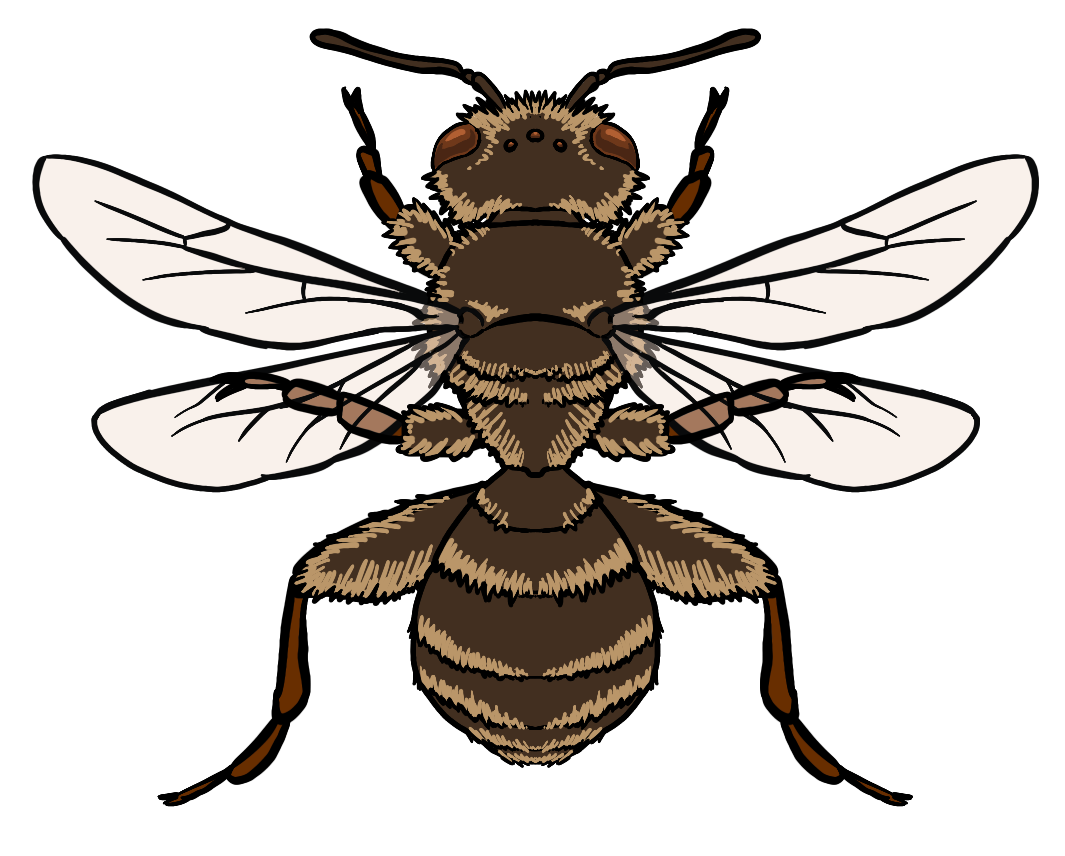
This medium-sized cuckoo bumble bee has a dark face and a yellow band just behind the head. A broad black patch covers much of the thorax behind that band. The abdomen is mostly black, sometimes with yellow hairs along the sides and a band of white or pale yellow hairs near the tip, often on the fourth and fifth abdominal segments. Colour patterns vary. One clue that a female is a cuckoo bumble bee is her hind legs: she lacks the smooth pollen baskets (corbicula) used by nest-building queens and workers to carry pollen.
-
Alberta’s documented records come from Elk Island National Park, where the Macropis Cuckoo Bee was found in 2010 and again in 2025 by ANBC.
The host is Macropis nuda, a solitary oil bee. A female oil bee digs her nest in well-drained, often sandy soil near patches of native loosestrife, which supply the oil the host bee uses to line her nest cells and, together with pollen, provision them for her young.
The Macropis cuckoo bee female enters the oil bee’s nest and lays an egg. When her larva hatches, it eats the food the host mother stored for her own offspring. There are no workers involved.
Disturbance to nesting ground or the loss of native loosestrife can affect the host bee and, in turn, its cuckoo. Invasive plants can also crowd out the flowers the oil bee needs. Too few Alberta records exist to tell how these pressures are affecting the cuckoo bee’s population in the province.
Finding a rare bee began with a flower
In summer 2025, Lisa Neame with ANBC found a Macropis Cuckoo Bee in Elk Island National Park, 15 years after the previous Alberta record. The team had searched in 2024 without finding it. To narrow the search, they used plant observations, including records shared on iNaturalist. A patch of fringed loosestrife (Lysimachia ciliata) gave them a place to look for the host bee and, in turn, its cuckoo. The 2025 find confirms the cuckoo bee’s presence in the park but leaves two questions open. How many are there, and how many other Alberta sites support all three species?
Read ANBC’s Elk Island field story Read the published account of the 2010 record
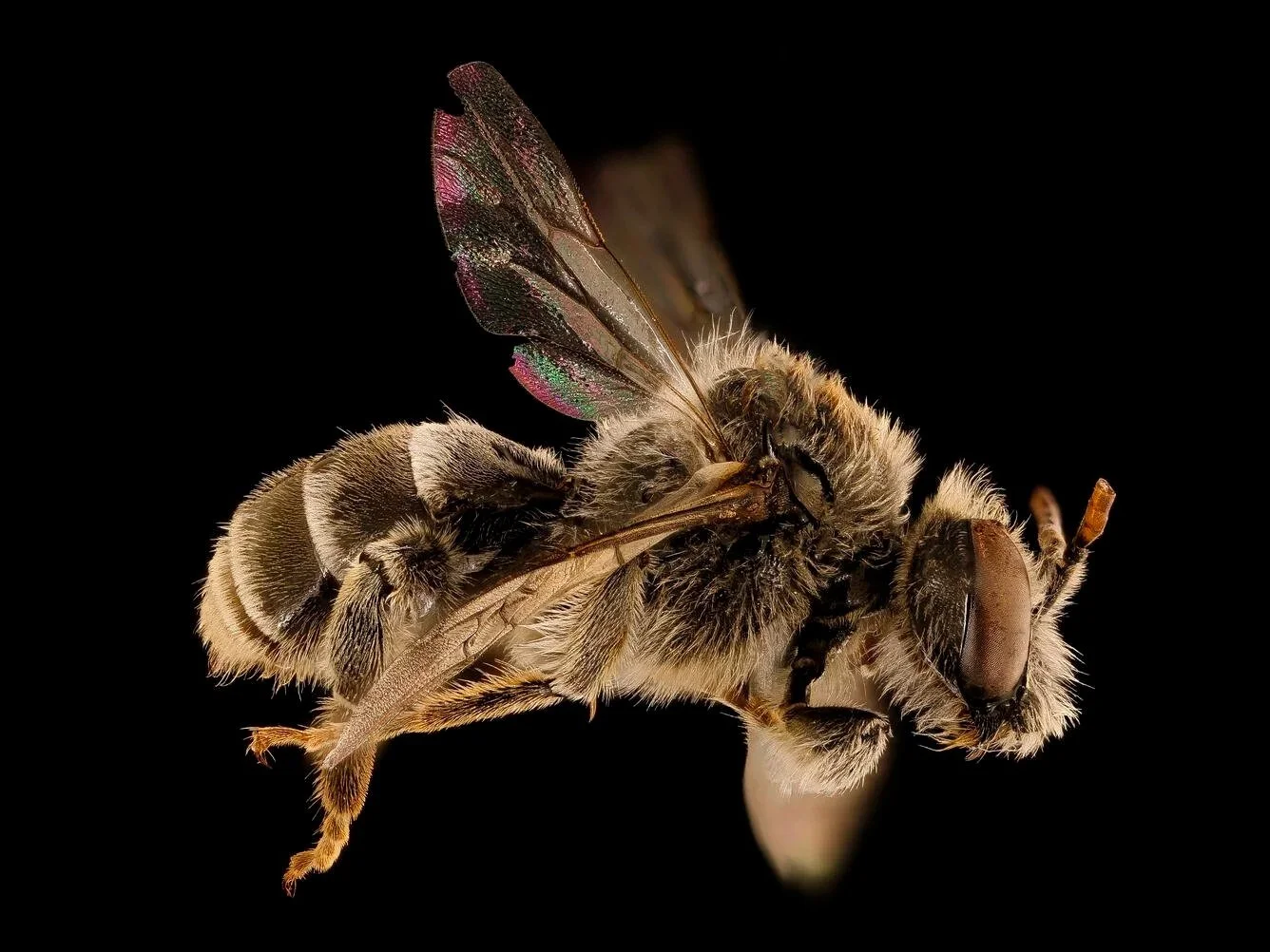
The cuckoo bee
The cuckoo bee lays her egg in the host’s nest. A female Epeoloides pilosulus lays an egg in the nest of their host bee, the solitary Macropis Oil Bee. Her larva eats the food the host mother stored for her own offspring. Unlike the case with cuckoo bumble bees, there are no workers tending the cuckoo bee’s larvae here.
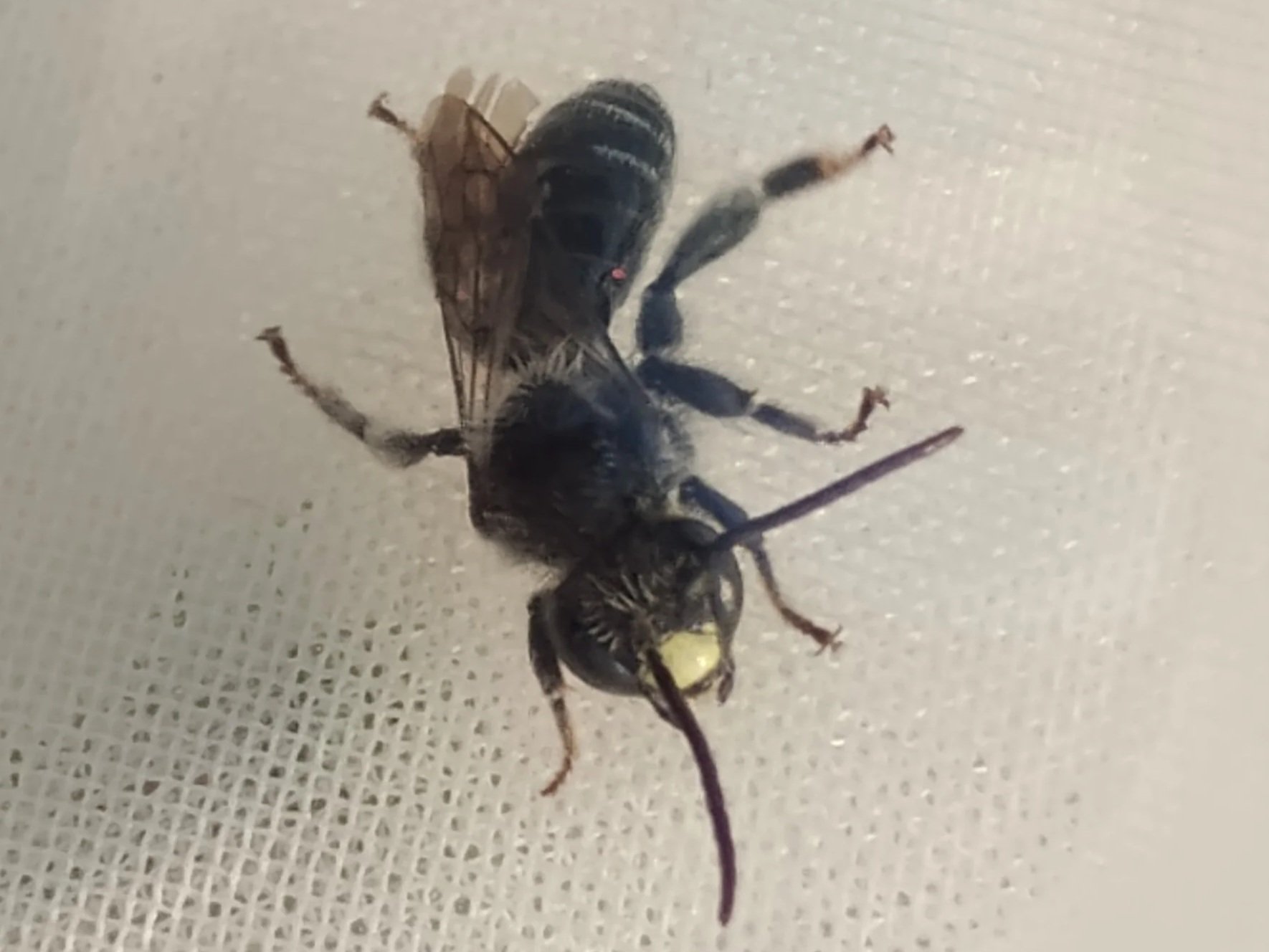
The oil-collecting host bee
The oil bee builds and stocks the nest. A female Macropis nuda digs into well-drained ground. She gathers pollen and floral oils from native loosestrife flowers, mixing them into a ball of food for her young. She also uses floral oil to line the nest cells. Those prepared cells are what the cuckoo bee depends on.
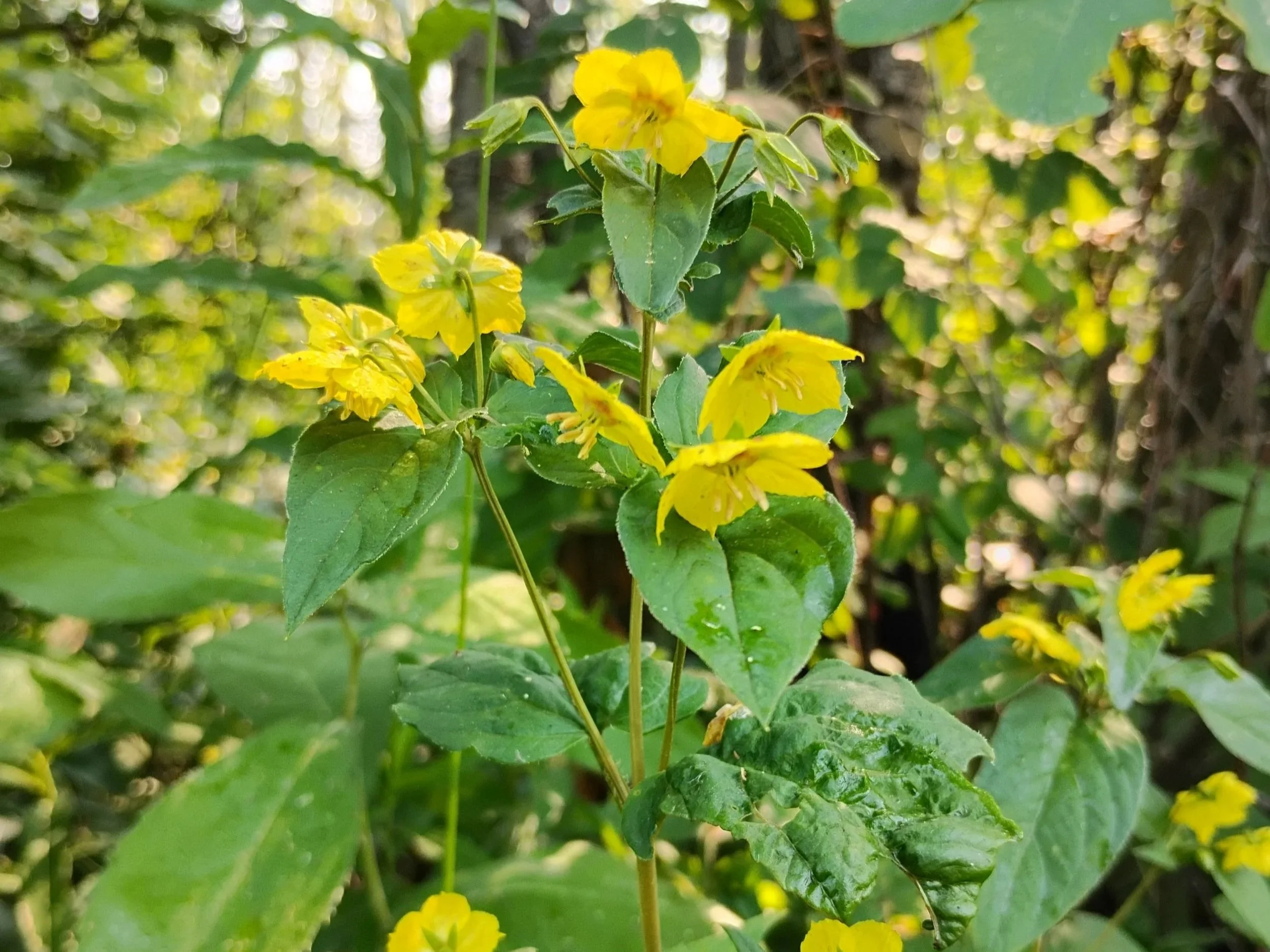
The oil-producing plant
The plant supplies the oil. Fringed loosestrife (Lysimachia ciliata) bears yellow flowers and thrives in moist places such as woodland edges. Where suitable nesting soil is nearby, a patch can support oil bees. The invasive purple loosestrife (Lythrum salicaria) is a different plant and is not harvested by Macropis oil bees.
Threats to native bees
-
A flowering meadow, a sunny patch of bare soil and a sheltered woodland edge can each meet different needs for different bees. When native grasslands, wetlands or forest edges are developed or divided, thus losing connectivity, bees can lose both nesting places and the flowers within reach of them. Effective native bee conservation relies on the protection of existing and restoration of native pollinator habitat in areas where it has been degraded.
-
Bees can encounter pesticides through direct spray, dust released when treated seed is planted, or residues in pollen and nectar. Some exposures kill bees. Others can affect their ability to find food, fight off infection, or reproduce. Some neonicotinoid insecticides are applied as seed coatings and are taken up by the growing plant. Herbicides can also affect bees in a different way when they remove flowering plants from the places bees forage.
Integrated pest management (IPM) starts with identifying the pest and checking whether it is present at levels that warrant action. In a field, garden or park, that can mean scouting before treating, considering non-chemical controls and targeting treatment where it is needed. Keeping spray and planting dust away from flowering field margins helps protect bees using those areas.
-
Rising temperatures, altered precipitation patterns, and extreme weather events can also disrupt the synchronization between bees and their floral resources. This can result in a mismatch between the emergence of bees and the availability of flowers for foraging. More research needs to be done to better understand climate change impacts on bees and how to mitigate them.
-
Pests, pathogens and diseases can negatively impact native bees. Some of these are issues that native bees evolved with, while others are unintentionally introduced by spread through managed bees, like domesticated bumble bees and honey bees. More work needs to be done to understand and mitigate the impacts of existing and novel pests, pathogens and diseases.
As a precaution, beekeepers can help protect both managed and wild bees by carefully monitoring colony health and treating disease when needed. For Alberta greenhouses using commercial bumble bees, keeping colonies contained within the greenhouse is another precaution that helps limit contact with wild bees.
-
A landscape can have thousands of flowers one week and very few the next. A flowering crop may provide abundant forage for a short period, while nearby willows, wildflowers and shrubs feed bees before and after the crop blooms. Variety matters, and some native bees forage on a narrow group of plants. Since managed bees forage on many of these same resources, more research is needed to better understand and mitigate the impacts of competition between managed bees and native bees.
-
While there is tremendous public interest in bees and pollinator conservation, there is still a gap in public awareness about the distinction between managed honey bees and native bee populations. Beekeepers raise honey bees as agricultural livestock for honey production and crop pollination, while Alberta’s native bees are wildlife.
Many people who want to “save the bees” think first of adding a honey bee hive. Beekeeping plays an important role in agriculture, but adding a hive only increases the number of managed honey bees and does little to address the loss of habitat that on which many native bees depend. Where flowers are scarce, additional colonies can also increase competition for nectar and pollen.

What you can do
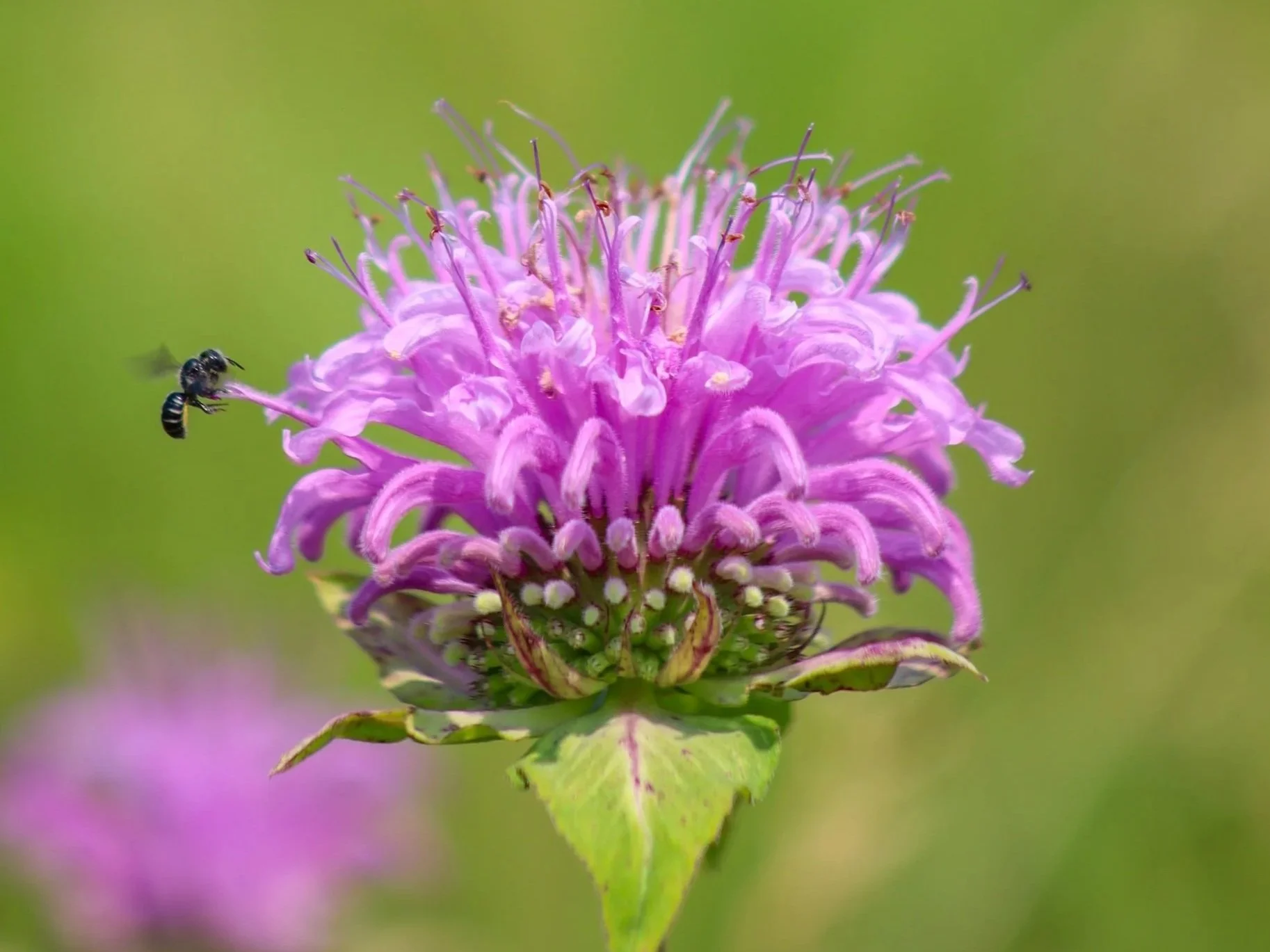
Plant native flowers
Alberta’s native bees evolved alongside the plants that grow here, and so provide them with the right nutrients to feed and grow their young. For some specialist bees, pollen from a particular group of plants is essential to their survival. Choose native flowers that suit your site and bloom at different times so bees can find food from spring through fall.
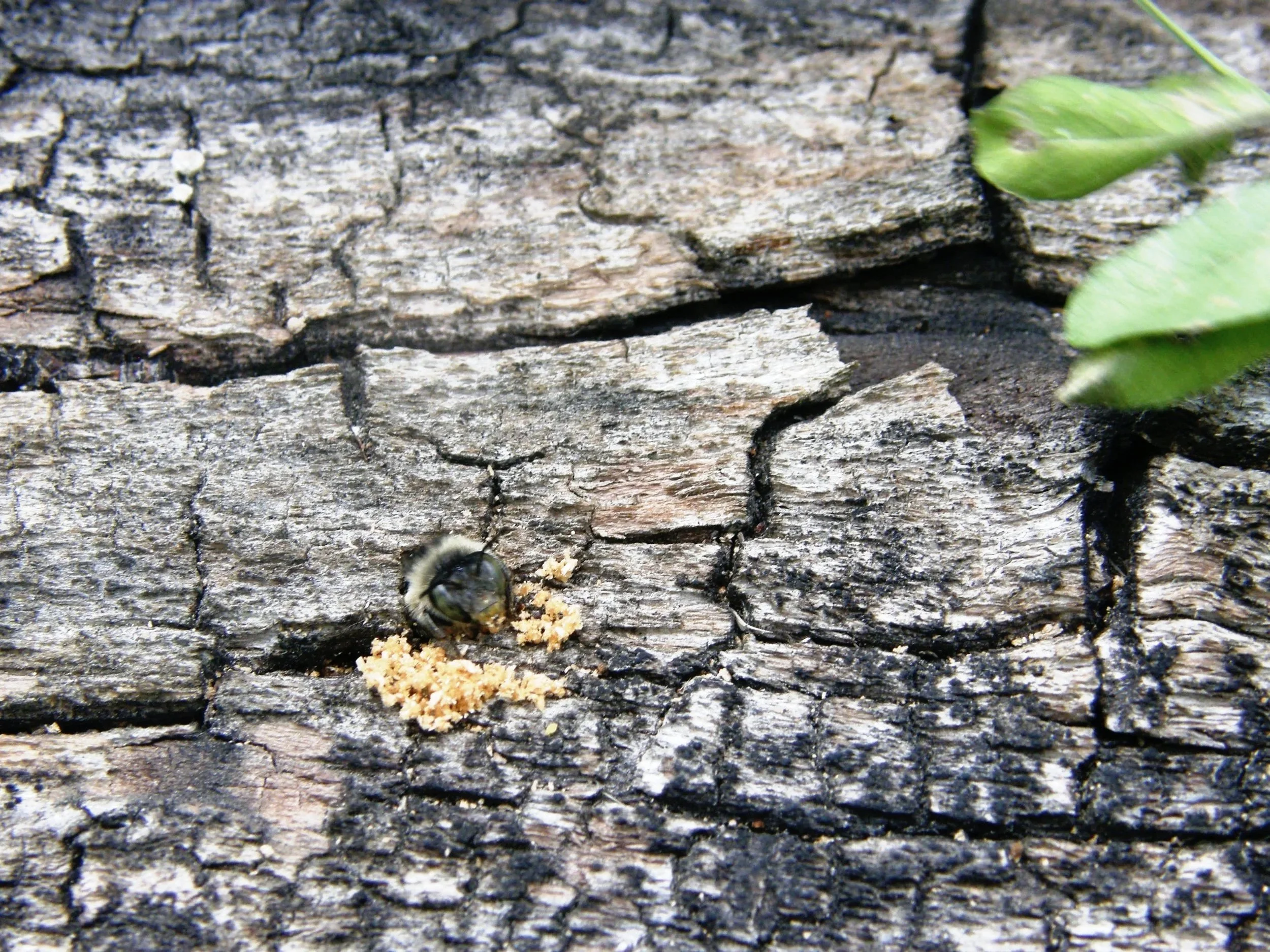
The oil-collecting host bee
Many of Alberta’s native bees nest underground. Leave a small patch of sunny, well-drained soil undisturbed and free of mulch or landscape fabric for nesting sites. Other bees nest in hollow stems or existing holes in dead wood. Leaving a few standing stems or a weathered log in place can give them somewhere to raise their young. If you’d like to add a bee hotel, our guide explains how to choose and care for one. Or, build a bumble bee nest box and join ANBC’s Bumble Bee Box Monitoring Program. Set your box out in spring, watch for bumble bee activity and let us know whether a colony moves in!
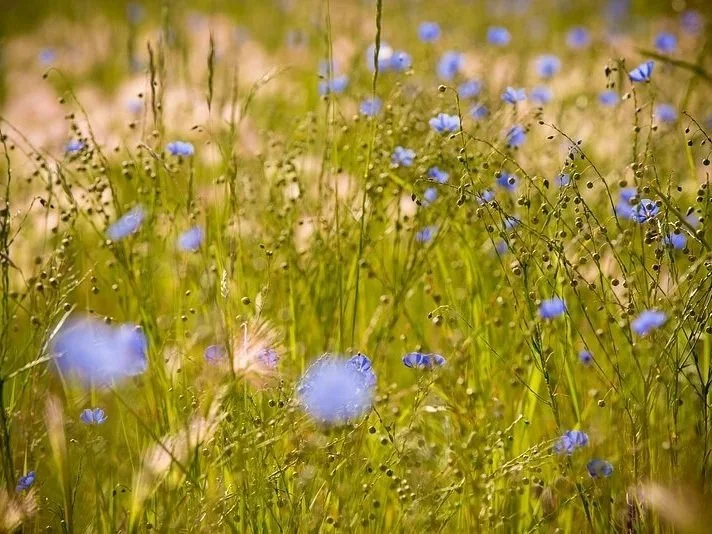
The oil-producing plant
Start with two questions: Where could habitat fit on your farm, and what else would you like that land to do? A shelterbelt can reduce wind while flowering shrubs feed bees. Along a creek or dugout, native vegetation can help hold soil in place while providing forage. Before planting, look for native flowers and shrubs already growing along field edges, fence lines or banks. Protecting a patch that’s already there can be a simple first step. The Agroforestry and Woodlot Extension Society of Alberta (AWES) has practical guides for planning these projects.
Share a sighting
Take a photo and share what you saw. Approach a foraging bee slowly. Try for clear views of the face, back and side without handling it. If possible, record things like the date, location, flower and habitat. If you are unsure of the species, a broader identification such as “bumble bee” can still be useful. Plant observations can help too. They helped guide our Elk Island surveys in the rediscovery of the Macropis cuckoo bee detailed above.
Submit a bee or plant observation to iNaturalist Canada or submit a sighting to Bumble Bee Watch to help out as a citizen scientist and contribute data that can be accessed by researchers anywhere! For a sensitive bee or nest, set location visibility to obscured or private before posting.
What ANBC and its partners are doing
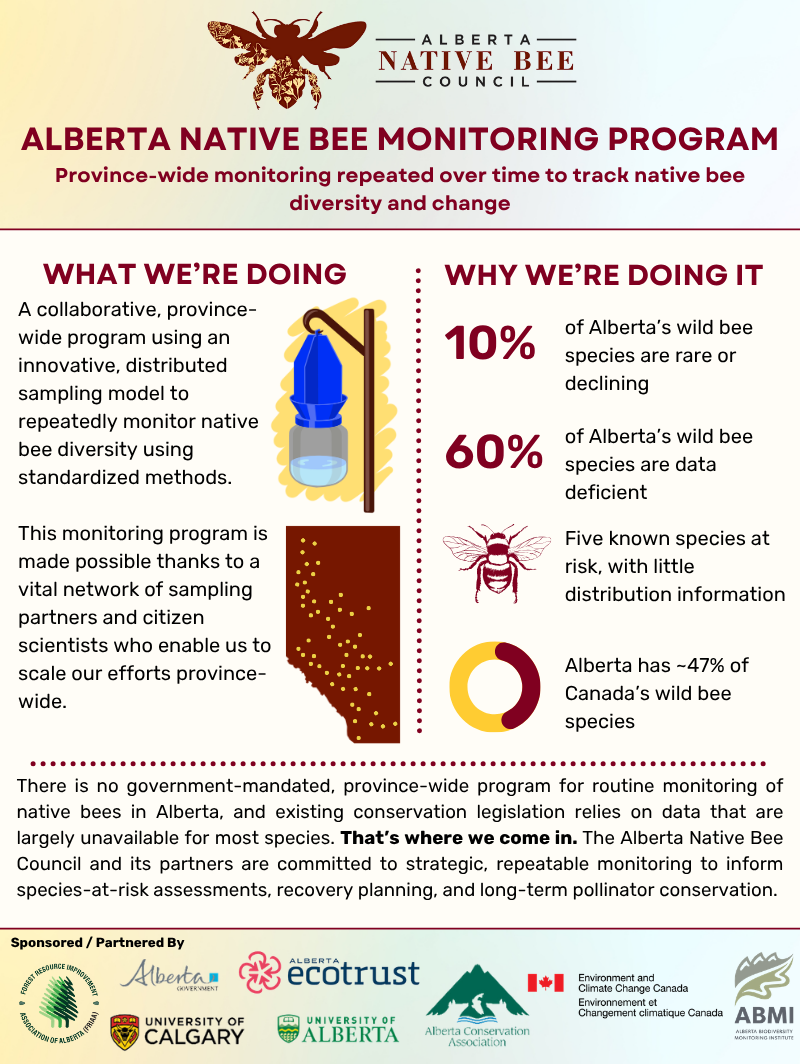
Returning to the field. Our Provincial Native Bee Monitoring Program surveyed Alberta’s native bees in 2018 and again in 2024. In 2024, 49 sampling partners helped across the province, extending our reach into understudied regions. Partners included the Alberta Biodiversity Monitoring Institute, Alberta Forestry and Parks, the Association of Alberta Agricultural Fieldmen, Watershed Planning and Advisory Councils, and local volunteers. By repeating surveys, we can compare where species are found and how often we encounter them. For bees of conservation concern, these records help guide future surveys and recovery efforts.
Putting records to work. Our 2018 survey helped shape our bumble bee guides for central and southern Alberta, from the species readers can expect to find in each region to the colour patterns they’re most likely to see. At Elk Island National Park, plant records helped answer a different question. Observations of native fringed loosestrife, including sightings shared on iNaturalist, helped our team choose where to search for the Macropis Cuckoo Bee. In 2025, we found it in the park again, 15 years after the previous Alberta record.