Pollinators, crops, and field borders: oh my!
By Rachel Pizante
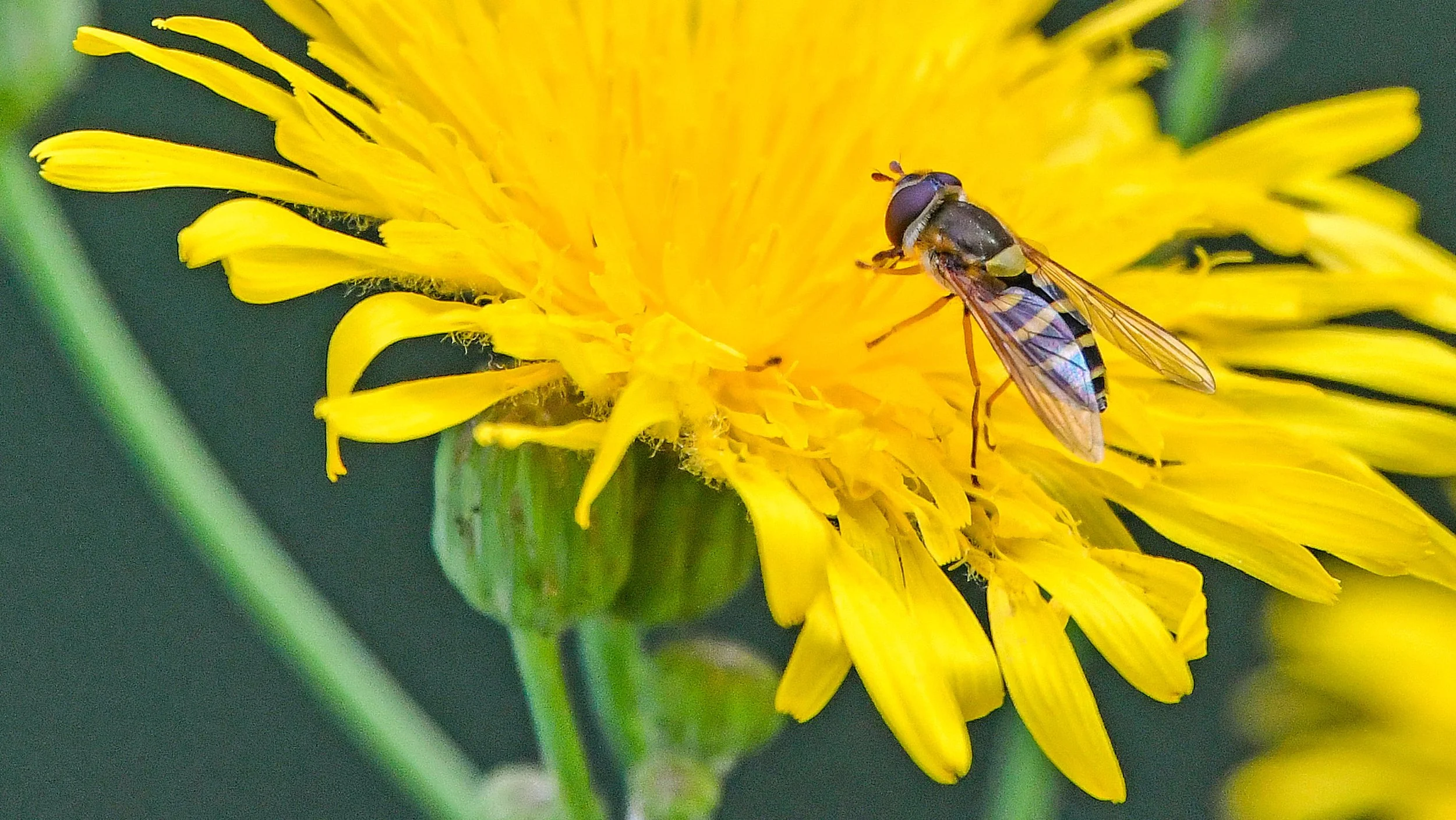
Hoverfly (Syrphidae)
Photo by John Acorn
Pollinators are important in agricultural areas because of their namesake: they pollinate! However, although pollinators are good for agriculture, agriculture is not necessarily good for pollinators. Large monocultures take up a lot of land and reduce the overall diversity of resources. Although crops like canola do provide floral resources for pollinators, like nectar and pollen, they only provide those resources for a few weeks each year, leaving large amounts of land without floral resources during the rest of the growing season. When mass-flowering crops (crops that provide lots of flowers during a short period) are not in bloom, pollinators must rely on field borders, which are narrow strips of non-agricultural land that separate crops from other crops, roads, properties, or any other feature on the landscape, for floral resources.
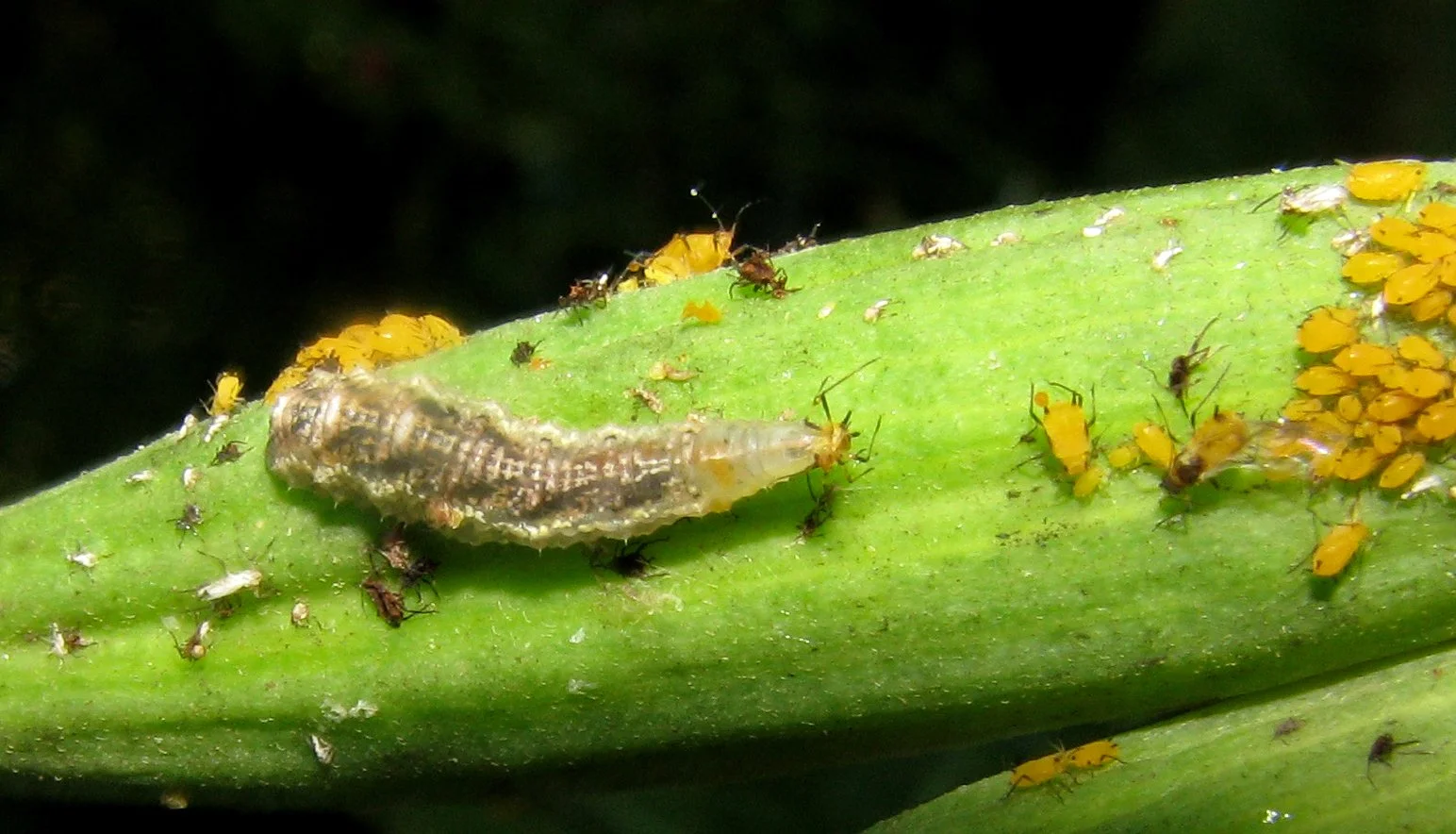
Hoverfly larva eating aphids
CC-BY 2.0 photo by Kerry Wixted
Pollinators are a diverse group of animals, with insects such as bees, flies, beetles, butterflies, and moths all contributing to crop pollination. Given the broad diversity of pollinators out there, they require diverse resources to survive. For example, hoverflies are a family of flies that mimic bees and wasps, but their resource requirements differ greatly than bees and wasps. The larvae of hoverflies have unique needs: some species have predaceous larvae that require access to aphid colonies, other species have aquatic larvae that have specific wetland requirements, and some have “saprophagous” larvae (feeds on decaying organic matter), meaning they require access to decaying wood. To make matters even more complicated - hoverfly larvae do not have legs and cannot travel long distances! They can wriggle, but they don’t get very far. Because of this, females must be very careful where they lay their eggs so that the larvae have access to the resources they need. Adult hoverflies contribute to pollination, so larval and adult resources need to be within flying distance of the crop and be plentiful enough to support all of the hoverfly species in an area.
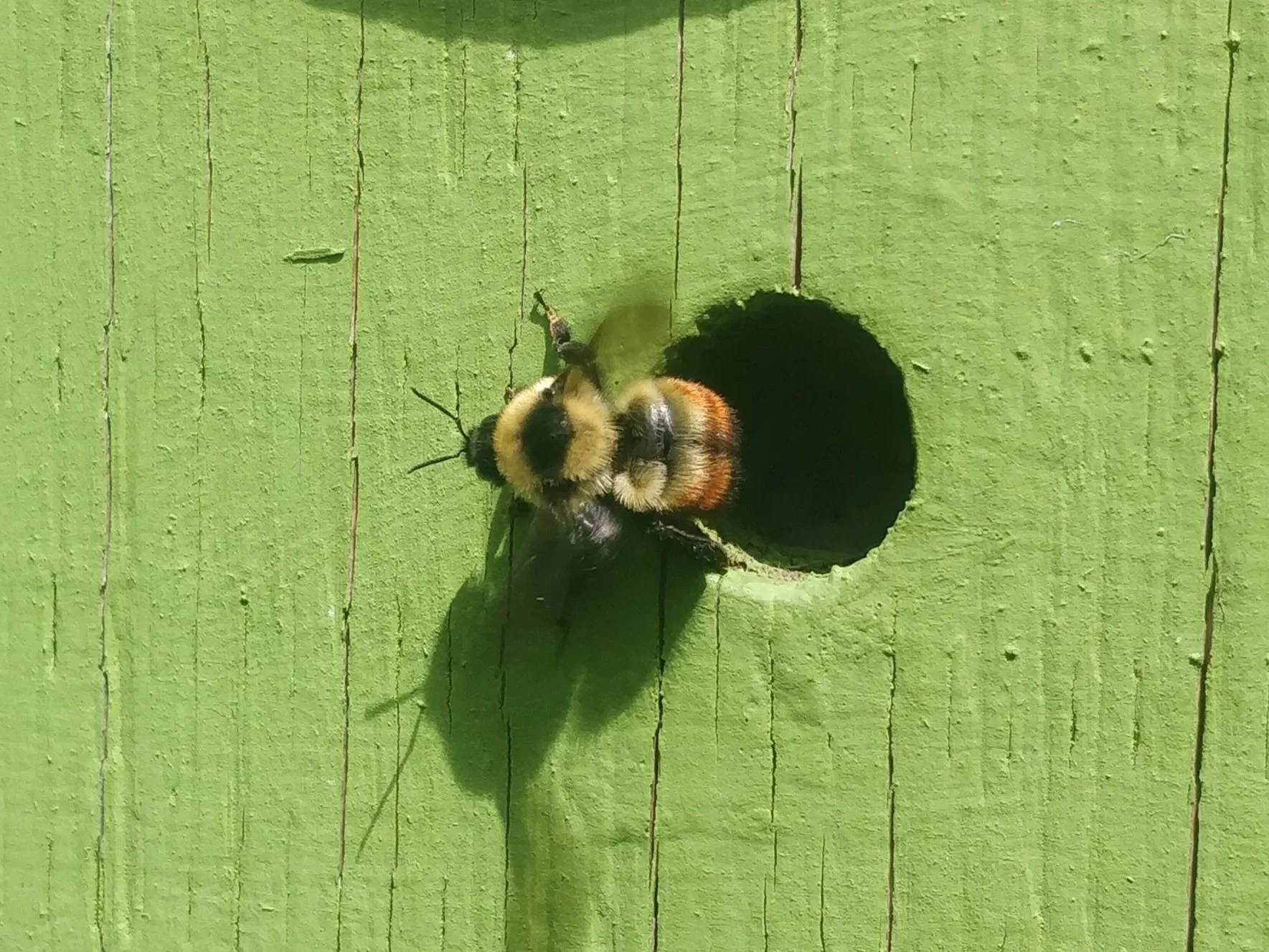
A red-belted bumble bee (Bombus rufocinctus) exiting a bumble bee box
Check out our bumble bee box monitoring program to build one of your own!
If the needs of pollinators are so diverse, how can we possibly manage landscapes to support all pollinators? One possible answer: diverse, small-scale habitats. My PhD research found that grassy and treed borders contain roughly the same number of pollinator species unique to each border type, so including both types of field borders around a single crop field doubled the number of pollinator species around that crop. In my study, both field border types were always well within the flying distance of most pollinator species, so the fact that some species were only found in one border type shows that some species prefer, or even require, specific types of small-scale habitats. Even some bumblebee species showed allegiance to a particular field border type: the yellow-fronted bumble bee (Bombus flavifrons) was found exclusively in treed field borders, while the red-belted bumble bee (Bombus rufocinctus) was found almost solely in grassy field borders.
Conservation efforts can be improved by ensuring that there are multiple types of small-scale habitats available for pollinators. In agricultural areas, this means that commonly removed features, like treed borders and wetlands, should be retained and even constructed to maximize pollinator species richness. Although small-scale habitats may not be big, their impacts are sizeable and protecting them can protect pollinators – bees and all!